Inspection of an Older System
Older systems are everywhere, and most arrive with no paperwork, a long-gone installer and a decade of weather on the isolators. This course shows you how to inspect one properly, judge it against the standard that applied when it was installed, and report what needs fixing.
Inspecting a ten-year-old solar system isn’t the same as inspecting a new one. You have to work out what standard applied at the time, spot the components that have aged or been recalled, and decide what’s a safety issue versus what’s simply not how we’d do it today — all while working safely around equipment you didn’t install.
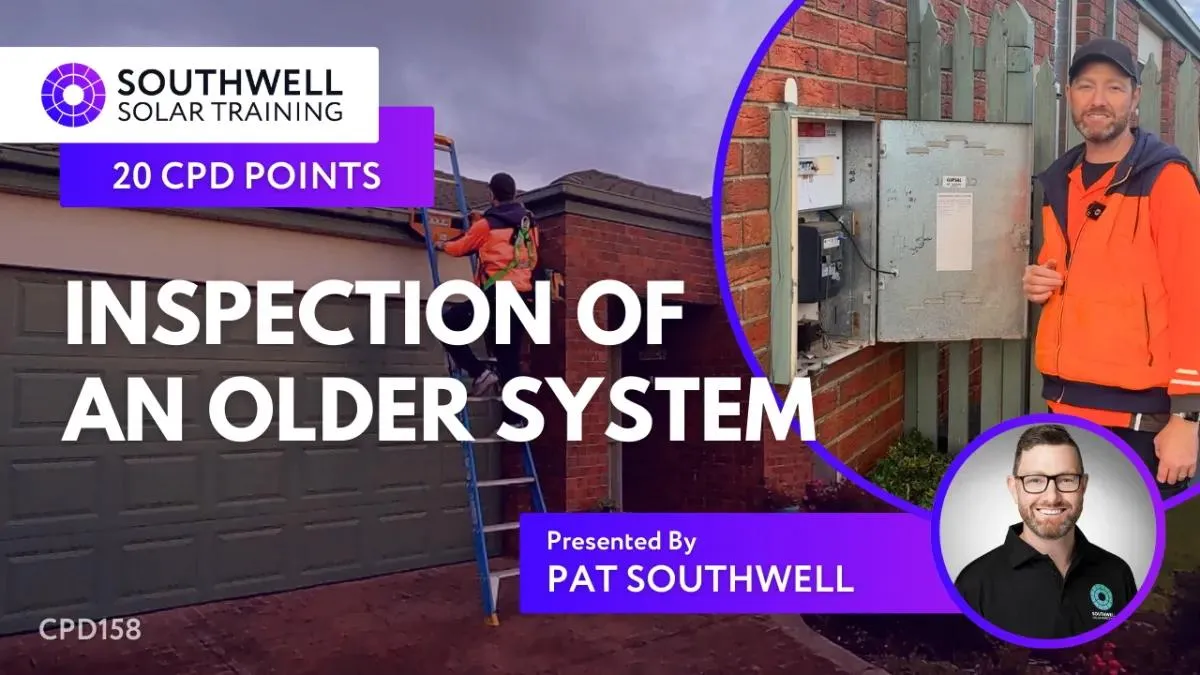
Pat inspects a real 2013 installation on a dark Melbourne winter afternoon: a faulty AC isolator, rooftop DC isolators fixed straight into the panel frame, top-entry conduit, a cracked panel that turns out to be a fire risk, an earth lug on the wrong rail channel. You’ll see how each finding is assessed, tested where it can be, and written up as a recommendation — including the tests that couldn’t be completed on the day and why.
What you’ll learn
- How to inspect an older system safely when there’s no documentation and the installer can’t be traced
- How to isolate correctly when the AC isolator fails, and why you shouldn’t isolate under load at the roof
- What to look for in aged DC isolators, conduit, connectors, fixings and earth connections
- How to recognise a panel that has gone from cosmetic damage to a fire risk
- How to write up findings and recommendations, including the tests to hand on to the servicing electrician
Course content
Course introduction and overview — 4 min
The system, its history, what’s being inspected and why the focus is safety and compliance rather than performance.
Inverter inspection — 3 min
Confirming the inverter is safe to approach, a faulty AC isolator, and choosing the right place to isolate.
Switchboard inspection — 1 min
UV-damaged conduit, the solar supply main switch, and confirming the inverter has dropped out.
Roof inspection — 11 min
A cracked panel, aged rooftop isolators, roof penetrations, MC4 connectors, the earth connection and the roof cavity.
DC isolator inspection and testing — 9 min
Top-entry isolators, checking for water ingress, string voltage and polarity, and the anti-islanding test that had to be handed on.
Wiring inspection at the switchboard — 1 min
Terminations, conductor identification and tightness.
Conclusion and maintenance — 3 min
Why servicing every one to two years matters, and how location changes that.
This course includes
- 20 CPD points (SAA accredited)
- 45 minutes of on-demand video
- Certificate of completion
- Real inspection of a 2013 system
Your presenter
Pat Southwell — Licensed Electrical Inspector
Pat inspects solar and battery installations across Victoria every week as a Licensed Electrical Inspector, with more than 7,000 inspections behind him. He co-hosts the Solar Sidekicks podcast and has trained over 1,000 installers through Southwell Solar Training.