
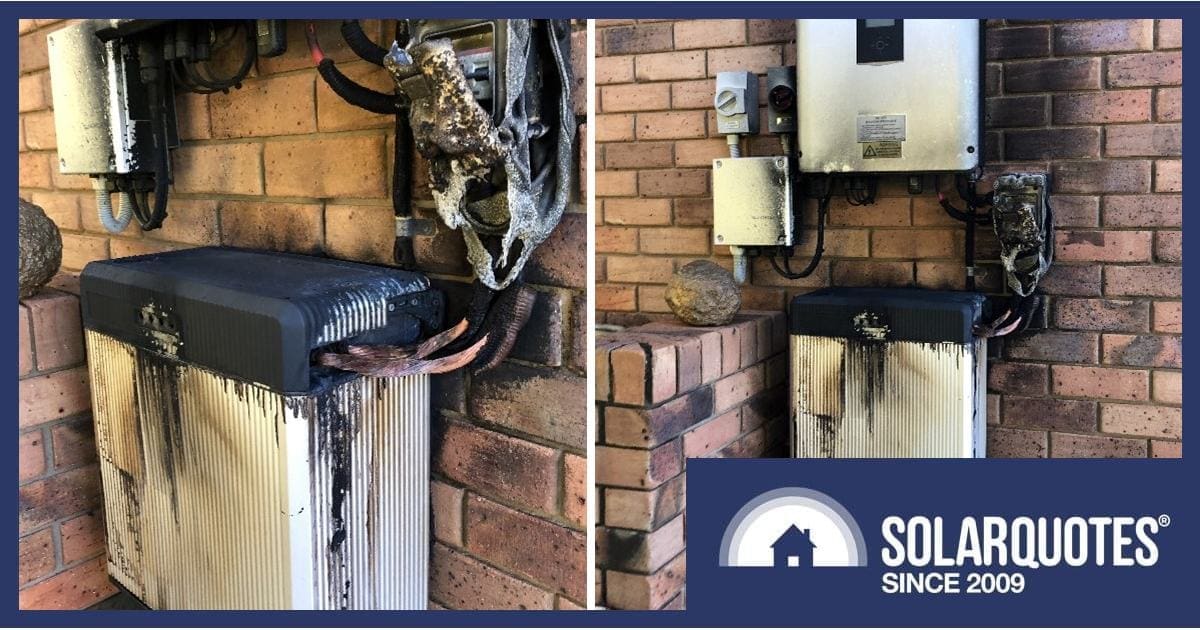
Battery Rebate Safety: These Key Tests Are Essential
Originally published 18 June 2025 on the Southwell Solar Inspections blog
With the launch of the Federal Government’s Cheaper Home Batteries Rebate Scheme, we’re about to see a serious uptick in grid-connected battery installations across Australia — and authorities will be ramping up inspections to make sure these are done safely. Here’s two key tests installers must undertake on new systems.
The federal rebate is great news for consumers and even better for the stability of our national electricity grid — but it also brings a big responsibility for installers.
The Clean Energy Regulator has flagged that an inspections program will ramp up after the July 1 start date, while the ACCC and state consumer bodies are on high alert for dodgy installs.
Here’s the truth: even though battery installs might seem straightforward on the surface, there are a few critical tests that absolutely cannot be skipped. These tests aren’t just box-ticking—they are safety-critical. Get them wrong, and you could end up with a system that’s not just non-compliant… but downright dangerous.
Let’s talk about the two mandatory battery installation tests (outlined in AS/NZS 4777.1:2024) that every installer needs to understand — and perform — every single time.
Why Battery Safety Tests Are Important
It’s worth explaining why this kind of testing matters for anyone getting a battery installed.
When a battery is added to your solar system, it’s not just about storing energy — it’s about doing it safely. These mandatory tests are designed to make sure your system doesn’t create hidden electrical faults that could damage equipment, stop safety switches from working, or even create an electric shock risk.
A good installer will test that electricity is flowing along the correct paths when the system is in backup mode, and confirm that safety switches (RCDs) still function correctly, even when the battery is powering your home. These checks don’t take long, but they are critical. If you’re having a battery installed, it’s reasonable to ask your installer what safety checks they’re performing — and whether your system has been tested in both normal and backup modes.
Two Key Tests
Whether an installer is new to battery installs or has been doing them for years, these two tests are non-negotiable: testing for parallel earthing paths, and confirming neutral continuity. Both tests must be done in backup mode, and both are vital to ensuring the system performs safely under fault conditions.
Test 1: Checking for Parallel Earthing Paths
This is a key test that many installers still miss — or misunderstand.
When some inverters switch into backup mode, the way they handle current can change. In certain setups, active current from a load might return to the switchboard via both the neutral and the earthing conductors. That’s a major red flag. Any current flowing in the earth conductor indicates a parallel earthing path — a situation that could be unsafe and result in defect notices or worse.
How an installer should perform the test: put the inverter into backup mode (confirm it’s not feeding from the grid); apply a decent load — such as a toaster or a hairdryer (I use a purpose-built hairdryer tester that draws around 8 amps); clamp a meter on the active conductor, then on the neutral conductor. The installer should see equal current in both. If there’s less returning through the neutral, the balance is likely going through the earthing conductor — and that’s a serious issue.
Note: a small load (e.g. 1 amp) won’t show enough variation to reliably detect faults. Use something drawing 8–9 amps for a meaningful test.
Test 2: Ensuring Neutral Continuity in Backup Mode
This test confirms that the neutral conductor in backup mode is continuous and connected to the main neutral bar. Without it, the Residual Current Device (RCD), which serves as a safety switch, may not function correctly during a fault — posing a significant risk.
Sometimes inverters switch the neutral out in backup mode, especially if incorrect country settings are used or the system hasn’t been fully configured. If the neutral is missing, the RCD may not trip when it should — leaving parts of the system unprotected.
How I do it: confirm the system is in backup mode; on a backup circuit, place one probe of a voltmeter on the active conductor (load side of the RCD or circuit breaker); place the other probe on the main neutral bar. The installer should see a voltage reading around 230V. If not, the neutral may have been switched out.
This test proves the RCDs on the backup circuits will still operate under fault conditions. Without that continuity, your safety systems simply won’t work.
Why Installers Need to Get This Right
With battery uptake growing fast, we can’t afford shortcuts. These tests are simple, quick to learn, and mandatory. Yet I still see installs where these checks are either skipped or misunderstood. That has to change — especially now, with thousands more systems about to be installed under the new rebate program.
Learn to Test Battery Installations Properly
To help support the industry through this shift, we’ve released a new course at Southwell Solar Training called Testing a Battery Installation, which covers the tools required to test safely, live demonstrations of both critical tests, a side-by-side comparison of compliant vs. faulty installs, and real-world examples of what can go wrong — like current flowing through the earth (a clear danger sign).
If you are an installer wanting to find out more on this course, take a look at our Southwell Solar Training website — we have more battery guides for installers on the way.
If you are a homeowner wanting to know what you can do to maintain your battery once it’s installed, check out the SolarQuotes guide to living with a battery.
Battery Safety Isn’t An Optional Extra
Battery installs are booming — and that’s exciting. But the basics still matter. Safety and compliance aren’t optional. These two simple tests make the difference between a reliable battery system and one that could put people at risk.
Get them right. Every time.